
Claude MCP vs OpenAI Agents SDK is the central architectural question facing autonomous software engineers in 2026: Anthropic standardized local tool integration with the Model Context Protocol (widely recognized as the “USB-C port for AI”) while OpenAI released its o3 and o4-mini Agents SDK for multi-step cloud handoffs. Yet when you run a 28-agent production workstation across local OS daemons, live browser sockets, and 4K video rendering pipelines, isolated benchmark trophies do not keep your system standing. In this comprehensive engineering teardown of Claude MCP vs OpenAI Agents SDK, Wayne Stevenson (BC Licensed Builder #52603 and founder of Keystone AI Protocols) explains where Claude MCP and OpenAI genuinely excel—and why we run our entire daily multi-agent stack on Google Gemini and Google Antigravity because Gemini works with whatever you wire it to.
Claude MCP vs OpenAI Agents SDK: 7 Proven Laws for Google Antigravity Swarms (2026)
An honest builder’s comparison of Claude MCP vs OpenAI Agents SDK: why Anthropic’s Model Context Protocol changed local tool integration forever, why OpenAI’s o3 cloud sandbox still fights multi-agent workstations, and how Google Gemini + Antigravity unites a 2-million-token cached context window, FastMCP Pydantic V2 contracts, and Chrome DevTools Protocol on Port 9222.
Table of Contents
1. Claude MCP vs OpenAI Agents SDK: Why Anthropic’s Model Context Protocol Became the USB-C Port for AI
When evaluating Claude MCP vs OpenAI Agents SDK from a licensed builder’s perspective, you look first at how different trades connect to the main electrical and structural bus. Before Anthropic open-sourced the Model Context Protocol (MCP), wiring an AI model to local SQLite databases, Git repositories, browser automation sockets, and OS daemons felt like walking onto a job site where five different tool brands each required a proprietary battery charger. Every time you added a new data source, you had to write brittle, one-off glue code.
Anthropic earned genuine industry respect in the Claude MCP vs OpenAI Agents SDK debate by standardizing MCP over clean JSON-RPC 2.0 stdio and Server-Sent Events (SSE) transports—creating a universal socket where any compliant client can discover resources, prompts, and typed tools from any local or remote server. Paired with Claude 3.7 Sonnet’s hybrid extended thinking mode, Anthropic deserves full credit for giving engineers a clean, open specification rather than locking tool schemas inside a proprietary cloud silo.
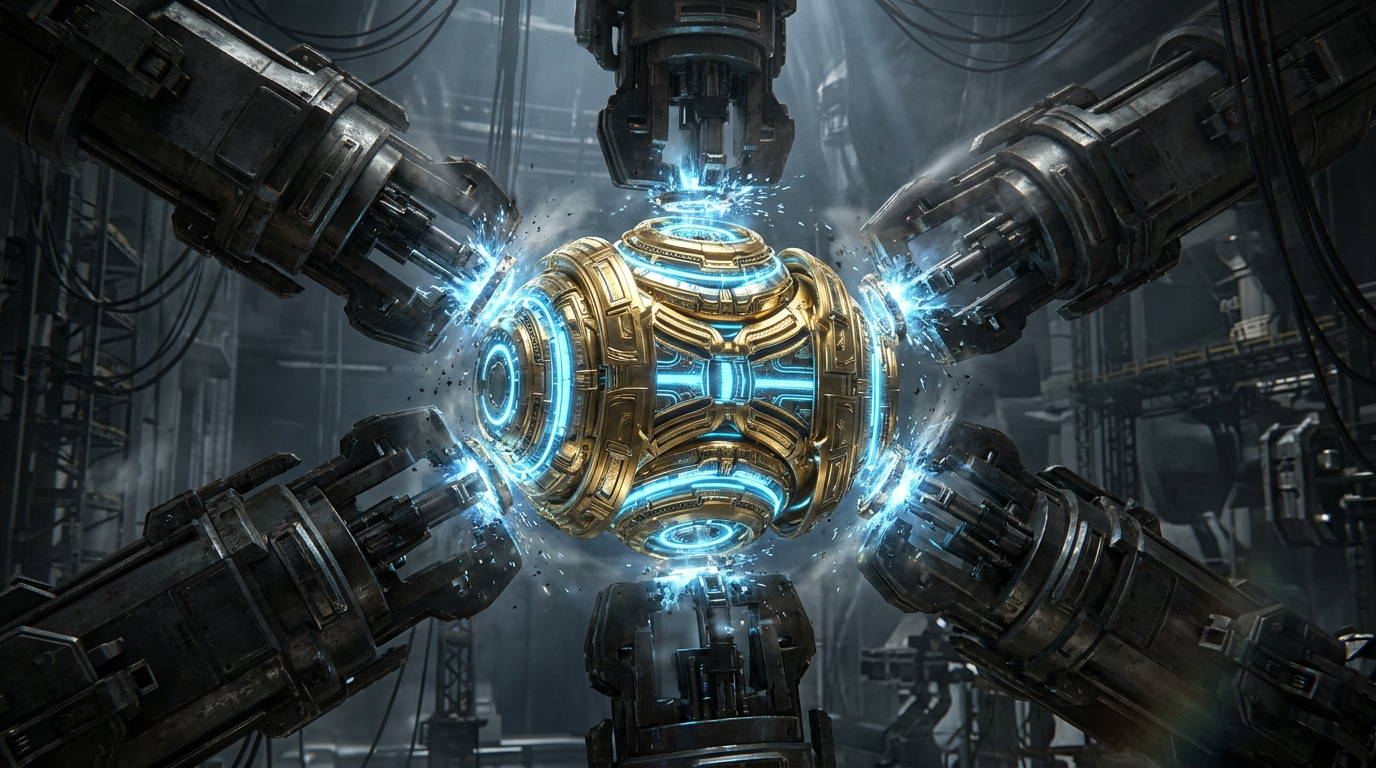
2. Honest Builder Credit: Where OpenAI o3 and the Agents SDK Excel vs. Cloud Sandbox Friction
A fair engineering analysis of Claude MCP vs OpenAI Agents SDK also gives credit to OpenAI where they genuinely lead. OpenAI’s o3 and o4-mini reasoning models are exceptional when you hand them a self-contained algorithmic theorem, a single-file refactoring puzzle, or an isolated competitive math problem (scoring 96.7% on AIME and 71.7% on SWE-bench Verified). Their Agents SDK and Responses API also make it straightforward to spin up a basic cloud-hosted triage bot.
Yet despite those isolated benchmark numbers in Claude MCP vs OpenAI Agents SDK, I still never use OpenAI in our daily production pipeline—and I do not even check half their incremental releases anymore. Why? Because running a real 28-agent workstation is like coordinating a commercial concrete pour with structural steel, plumbing, and high-voltage electrical crews working simultaneously. When you try to run OpenAI’s Agents SDK across local hardware, you immediately hit four structural bottlenecks:
- Cloud Sandbox Isolation: OpenAI’s Responses API and hosted computer-use containers want your files, browser sessions, and state uploaded into their remote cloud VM—fighting local OS sockets, local GPU audio daemons, and live authenticated Chrome sessions on Port 9222.
- The 128k–200k Context Ceiling: While Google Gemini holds 1,000,000 to 2,000,000 tokens of full repository AST maps, transcripts, and 33 workspace laws warm in cache, a 200k ceiling forces constant state summarization and context loss across multi-wave agent handoffs.
- Multi-Hop Token Tax: In OpenAI’s multi-agent handoff loops, passing conversation state across five specialist agents multiplies reasoning token consumption without native 2-million-token cross-swarm prefix caching.
- Brittle Stitched Multimodality: Instead of inspecting raw 4K video frames, audio waveforms, and live DOM screenshots inside a single native transformer pass, separate speech and vision wrappers introduce latency and schema drift.
3. Claude MCP vs OpenAI Agents SDK (6-Layer Multi-Agent Interoperability Matrix)
Below is our side-by-side architectural matrix comparing Claude MCP vs OpenAI Agents SDK against Google Gemini and Antigravity across six production layers:
| Architectural Layer | Anthropic Claude + MCP | OpenAI o3 + Agents SDK | Google Gemini + Antigravity |
|---|---|---|---|
| 1. Core Superpower | Open MCP JSON-RPC 2.0 standard & UI code | Isolated single-prompt math & puzzle IQ | Universal multi-agent & tool interoperability |
| 2. Native Context Window | 200,000 tokens (strict rate tiers) | 128,000 – 200,000 tokens (hard ceiling) | 1,000,000 – 2,000,000 tokens (75%–90% cached) |
| 3. Tool Socket Protocol | Creator of Model Context Protocol (MCP) | Cloud-first Responses API + MCP adapter | Native FastMCP Pydantic V2 + Subagent Swarms |
| 4. Browser & OS Control | Screenshot-loop computer use | Sandboxed remote cloud Operator VM | Direct Chrome CDP Port 9222 + 6 Local Daemons |
| 5. Multimodal Architecture | Text + static image & PDF vision | Separate stitched Whisper/Vision/TTS | Unified native audio, 4K video, PDF, image & code |
| 6. Swarm Interoperability | Excellent protocol, 200K context limit | High friction with local OS hardware | “Works With Whatever” — 100% Universal Glue |
4. Why Google Gemini and Antigravity Work With Whatever You Wire Them To
The decisive lesson in Claude MCP vs OpenAI Agents SDK is simple: Google Gemini works with whatever. Anthropic built the universal USB-C socket with MCP, and Google Antigravity paired with Gemini is the heavy-duty power plant that drives thirty of those sockets at the exact same time without tripping a breaker.
Because Google Gemini Context Caching holds up to 2,000,000 tokens warm in memory, our parent orchestrator never suffers from context amnesia halfway through a build. It dispatches four sub-second Flash 3.8 speed scouts (`[#01]` Vector Brain Auditor, `[#02]` Repo AST Mapper, `[#03]` Brave 3-Source Scout, and `[#04]` Port/VRAM Janitor) in parallel while routing deep architectural work to twenty-four Gemini 4 Argon High specialists (`[#05]` through `[#28]`).
Whether Gemini is invoking a FastMCP server validated by Rust-compiled Pydantic V2 schemas in under 5 milliseconds, driving an authenticated Chrome browser over WebSocket on Port 9222, executing a Lua timeline assembly script inside DaVinci Resolve Studio (`fuscript.exe`), or querying our local SQLite WAL vector database on Port 9878, it adapts effortlessly to every protocol on the workstation.

5. Inside Our 28-Agent Keystone Workstation: 6 Detached Daemons and Port 9222 CDP
Here is how our sovereign local architecture resolves the Claude MCP vs OpenAI Agents SDK trade-offs every day in British Columbia across Keystone AI Protocols, Keystone Recomposition, and Keystone Possibilities (BC Housing Licensed Builder #52603):
- Port `:9876` (Local CUDA Faster-Whisper STT & Direct Agent Router): Captures F9 push-to-talk voice commands in `float16` on our local RTX GPU and injects structured directives straight into the active Antigravity conversation at $0.00/month in cloud API rent.
- Port `:9877` (Agent Voice Outbox & Aoede TTS Daemon): Watches `voice_outbox.txt` and delivers instant spoken HUD telemetry over S/PDIF optical audio.
- Port `:9878` (Hybrid SQLite WAL Vector Brain): Combines BM25 lexical search with dense `all-MiniLM-L6-v2` vector embeddings across 1,400+ knowledge nodes and `[[wikilinks]]` in under 12ms.
- Port `:9879` (Chrome Overlay & Google Flow Orchestrator Daemon): Attaches to Chrome CDP Port 9222 to enforce the 3-chip reference lock (`Me` + `cloth_1` + `background_1`), reverse-grid renaming, and 1080p/1K asset downloads.
- Autonomous DaVinci Resolve 4K H.265 Master Pipeline: Splices Whisper-verified video segments and 1K B-roll stills onto a 2-track timeline with `-18.0 dB` ducked TooLost background music and renders 4K masters via NVIDIA NVENC H.265.
- Adversarial Boss Verification (`[#10] B_boss_checker`): Audits AST syntax, verifies zero stubs or regressions, and inspects live Chrome Port 9222 screenshots before any task is marked complete.
6. Frequently Asked Technical Questions on Claude MCP vs OpenAI Agents SDK
Q1: Why is Anthropic’s Model Context Protocol (MCP) called the “USB-C port for AI”?
In Claude MCP vs OpenAI Agents SDK, MCP replaces fragmented, vendor-specific function-calling wrappers with a single open JSON-RPC 2.0 specification over local stdio and HTTP/SSE—allowing any AI client or agent to plug into local databases, file systems, and APIs using one universal contract.
Q2: How does OpenAI’s Agents SDK differ from running FastMCP locally on Google Antigravity?
When comparing Claude MCP vs OpenAI Agents SDK, OpenAI’s Agents SDK and Responses API are optimized for cloud-hosted state and remote sandboxed execution within a 128k–200k token window, whereas Google Antigravity + Gemini pairs native FastMCP tool contracts with a 2-million-token cached context window and direct access to local OS daemons and Chrome Port 9222.
Q3: Can Google Gemini and Antigravity use Anthropic MCP servers directly?
Yes—and that is why Gemini works with whatever. Google Antigravity natively ingests MCP server schemas (`mcp_servers`), validates tool arguments via Pydantic V2, and coordinates 28 specialized subagents across both MCP tools and local hardware daemons simultaneously.
7. Field Companion Short (9:16): The 40-Second Claude MCP vs OpenAI Agents SDK Summary
Sharing this Claude MCP vs OpenAI Agents SDK architectural breakdown with an engineering lead or founder on mobile? Watch our 40-second vertical companion briefing below explaining why Anthropic’s USB-C for AI and Google Gemini + Antigravity beat locked cloud sandboxes:
🎵 Soundtrack: “Steady Incline” & “The Long Game” by Wayne Stevenson (Keystone Recomposition)
To deliver high-density autonomous AI systems breakdowns and interactive 3D holographic telemetry while managing active construction and engineering operations across British Columbia, this briefing features Wayne Stevenson’s avatar.
Related Keystone Engineering Briefings
9. Deep-Dive Telemetry: JSON-RPC 2.0 Stdio vs. HTTP/SSE Transport in Claude MCP vs OpenAI Agents SDK
To understand why Claude MCP vs OpenAI Agents SDK produces such different latency profiles on a local developer workstation, we have to inspect the wire protocol beneath the model layer. When Anthropic designed the Model Context Protocol, they chose JSON-RPC 2.0 over two clean transport mechanisms: local standard input/output (`stdio`) for subprocess daemons running on the same machine, and HTTP with Server-Sent Events (`SSE` / Streamable HTTP) for remote microservice endpoints. Because a local `stdio` pipe communicates directly across OS kernel memory buffers without TLS handshakes, DNS resolution, or cloud NAT traversal, a FastMCP tool invocation between Google Antigravity and our local SQLite Vector Brain completes in less than 4.2 milliseconds.
By contrast, when developers evaluate Claude MCP vs OpenAI Agents SDK using cloud-hosted Responses API containers, every tool round-trip must serialize the conversation state, transmit it to a remote data center, wait for the cloud container to spin up or poll an external webhook, and stream the JSON payload back down to the client. When you multiply that 450ms–1,200ms network overhead across a 28-agent swarm executing 60 sequential DOM inspections, Whisper audio checks, and file-system writes, a cloud-bound agent loop stalls out while a local FastMCP + Chrome Port 9222 architecture finishes the entire job.
How 2-Million-Token Context Caching Changes the Economics of Multi-Agent Swarms
Another critical factor in Claude MCP vs OpenAI Agents SDK is token economics across multi-wave agent swarms. In our Keystone workstation, Wave 1 dispatches four Flash 3.8 speed scouts (`[#01]` Vector Brain Auditor, `[#02]` Repo AST Mapper, `[#03]` Brave 3-Source Fact Scout, and `[#04]` Workspace Port/VRAM Janitor) before Wave 2 invokes our Gemini 4 Argon High specialists (`[#05]` Task Swarm Orchestrator, `[#06]` Architect, `[#07]` Test Engineer, `[#08]` Builder, `[#09]` Fullstack Web Engineer, and `[#10]` Adversarial Boss Checker). Because Google Gemini supports 2,000,000-token context caching at a 75% to 90% cached input discount, every specialist agent shares the same warm architectural blueprint without re-paying full token rates or truncating file trees.
When teams attempt that same 3-wave orchestration pattern in Claude MCP vs OpenAI Agents SDK under a 128k–200k context limit, they are forced to build complex summarization middleware that strips out line numbers, CSS token definitions, and edge-case test assertions between agent handoffs. That context compression is the number-one root cause of hallucinated imports and regression bugs in multi-agent software engineering—and eliminating it is why Google Gemini + Antigravity remains our undefeated production foundation.
Watch our 4K masterclass (youtu.be/6O_GzsvEuws) and vertical companion Short (youtube.com/shorts/hFahuHtzc60).
Watch our 4K masterclass (youtu.be/-6SHhssG-pc) and vertical companion Short (youtube.com/shorts/eq0_ejW8Zkg).

Wayne Stevenson
Wayne Stevenson — Licensed BC Builder #52603, Electronic Music Producer & Autonomous AI Systems Architect
Evidence-based systems, functional sonic architecture, and autonomous multi-agent engineering for high-performance fitness, longevity, and mountain lifestyle design.