
Reclaiming Daytime Energy:
A Morning CJC-1295 & Ipamorelin Dosing Protocol to Erase GLP-1 Lethargy
Keystone Protocols | Clinical Case Study & Protocol Series — Episode 4
⚠️ Medical Disclaimer
This article is a personal case study for educational and scientific research purposes only. The author is a metabolic researcher and construction superintendent, not a licensed medical doctor. Nothing here constitutes medical advice. Therapeutic peptides and GLP-1 receptor agonists are highly powerful, prescription substances. Always consult a licensed physician.
⚠️ Digital Twin Disclosure
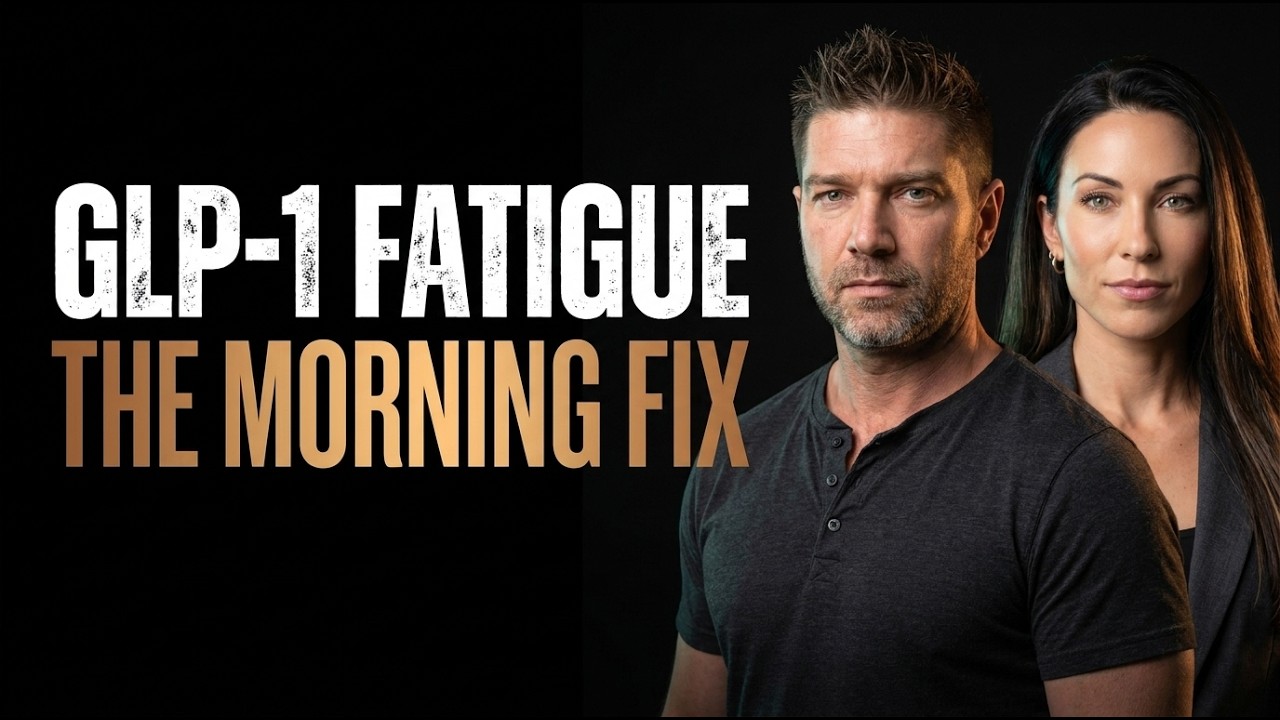
All video streams in this episode are presented by a photorealistic synthetic visual network representation (AI Digital Twin) of Wayne Stevenson and Victoria. All physical training logs, biomarkers, and local job site captures are authentic human-logged metrics.
The rapid adoption of GLP-1 and GIP/GLP-1 receptor agonists (such as Semaglutide and Tirzepatide) has transformed the landscape of weight management. However, patients frequently confront a severe secondary side effect that is rarely highlighted in marketing materials: **crushing, chronic daytime fatigue**.
For individuals working in physically and mentally demanding occupations—such as construction project management, heavy labor, or executive leadership—this energy crash presents a major barrier to productivity. In this case study, metabolic researcher Wayne Stevenson details his personal experience confronting Tirzepatide-induced lethargy after stepping his dosage up to $6.6text{ mg}$ (every 5 days) to manage returning food noise. He outlines the exact scientific mechanics and schedule modifications that successfully resolved this side effect.
1. The Biological Pathway: Stacking Secretagogues
When food noise returned, Wayne adjusted his Tirzepatide protocol to $6.6text{ mg}$ administered every 5 days. While this successfully suppressed appetite and stabilized metabolic progress, it retriggered severe daytime fatigue, typically hitting hardest around 2:00 PM.
To address this, we turned to clinical research examining growth hormone secretagogues. Stacking GLP-1 medications with Growth Hormone Releasing Peptides (GHRPs)—specifically **CJC-1295** and **Ipamorelin**—provides a synergistic approach to offset the fat-loss-induced loss of lean tissue and metabolic suppression.
🧬 CJC-1295 (No DAC)
A synthetic analog of Growth Hormone Releasing Hormone (GHRH). It binds to GHRH receptors on the pituitary gland, upregulating growth hormone output.
- Secretagogue Action: Upregulates pulsatile GH release, avoiding the constant bleeding effect of CJC-1295 DAC.
- Protein Synthesis: Accelerates cellular transcription for lean tissue repair.
🧬 Ipamorelin
A selective growth hormone secretagogue receptor (GHSR) agonist that mimics ghrelin, stimulating the release of growth hormone.
- Selective Binding: Stimulates GH without increasing prolactin or cortisol levels.
- Synergy: Combines with CJC-1295 to produce a larger pulsatile release than either peptide alone.
“Think of it like preparing a construction site. Tirzepatide clears the site by burning fat volume, but CJC-1295 and Ipamorelin bring in the structural steel—the cellular scaffolding—to preserve muscle integrity and maintain energy.”
2. The Timing Shift: Morning vs. Night Administration
Standard clinical guidelines suggest taking CJC-1295 and Ipamorelin immediately before bed to align with the body’s natural nocturnal growth hormone pulses. Initially, Wayne followed this standard advice, dosing 4 to 5 units subcutaneously at night.
However, individual biological feedback revealed a paradox: **night administration was significantly worsening morning grogginess and deepening the afternoon crash**.
To resolve this, Wayne implemented a simple but profound schedule shift: **moving the CJC-1295 / Ipamorelin administration to the early morning (fasted)**.
By injecting in the morning, the peak growth hormone pulse coincided with daily physical activity, successfully clearing the daytime crash and providing sustained focus and energy on the construction site. This highlights the critical importance of personal biological feedback over rigid clinical templates.
3. The Wolverine Stack Connection
To support systemic recovery and manage a stubborn shoulder injury that was halting physical progression, Wayne stacked this protocol with the **Wolverine Stack** (BPC-157 and TB-500).
Currently, Wayne is running a maintenance dose of **10 units of BPC-157 and TB-500 daily** (reduced from the initial loading phase due to excellent back healing). BPC-157 promotes localized angiogenesis (new blood supply line creation), while TB-500 facilitates cellular mobility to accelerate tissue healing at a cellular level.
4. Cortisol Management & Acoustic Frequencies
Managing a complex peptide regimen requires keeping systemic stress low. High cortisol levels can significantly blunt the efficiency of growth hormone secretagogues. To maintain focus and regulate nervous system stress during intense working blocks, Wayne utilizes ambient chillout music.
He produces his own ambient chillout jazz tracks to establish the perfect acoustic environment for deep work and physical recovery, helping keep stress levels low and metabolic pathways optimized.
5. Sourcing & Quality Standards
With the FDA actively restricting compounding pharmacies and the peptide market facing a surge of counterfeit products, sourcing integrity is critical. When obtaining peptides for research, Wayne enforces strict safety parameters:
- Third-Party HPLC Testing: Always demand a verified, independent Certificate of Analysis (COA) for every batch.
- 98%+ Purity Threshold: Never administer compounds with a verified purity level below $98.0%$. Mislabeled or contaminated compounds are a high threat to cellular integrity.
- Cold Chain Verification: Peptides are highly fragile proteins; if shipping fails to maintain stable cold temperatures, the compound completely degrades in transit.