
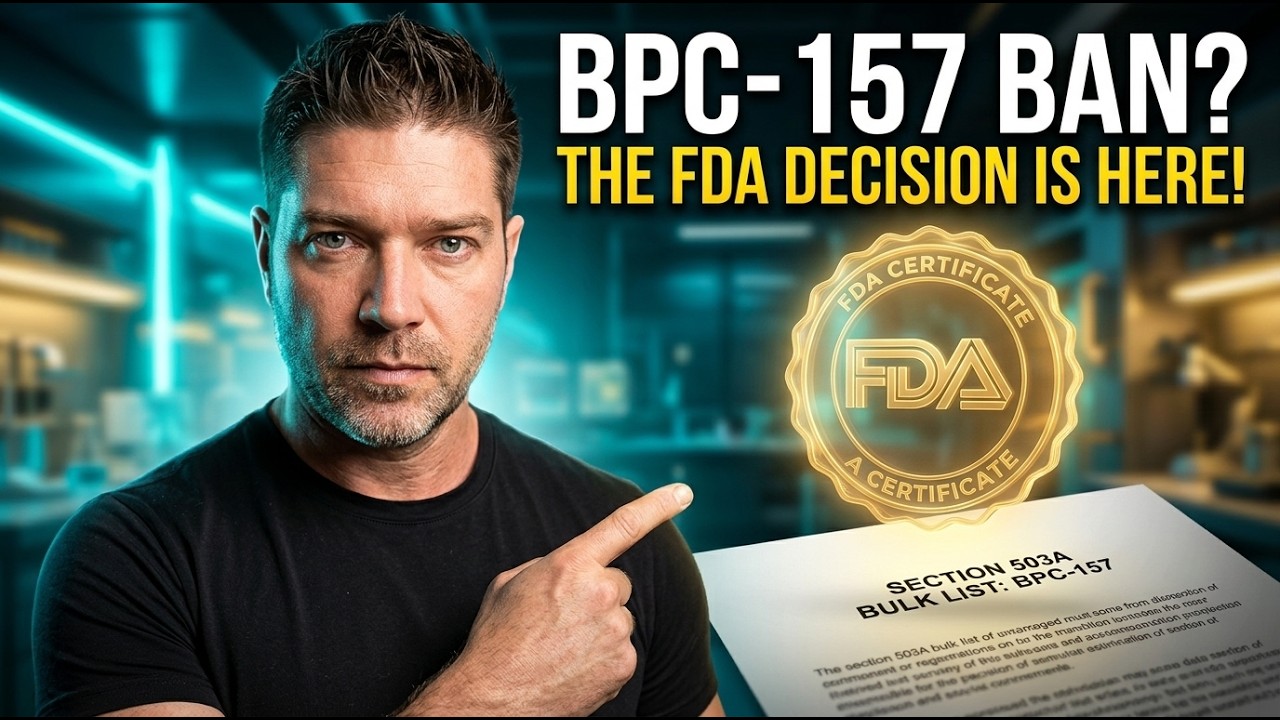
The FDA Pharmacy Compounding Advisory Committee (PCAC) recently concluded a historic meeting at White Oak — voting 8-6 to recommend BPC-157 Peptide Compounding, TB-500, KPV, and MOTS-c for inclusion on the Section 503A Bulk Drug Substances List.
This landmark regulatory decision represents a major victory for compounding pharmacies, integrative physicians, and patients relying on targeted peptide therapy for tendon repair, gut lining integrity, and cellular recovery.
The Historic 8-6 Vote: PCAC Overrules FDA Career Scientists
During the proceedings, advisory committee doctors evaluated extensive clinical literature surrounding synthetic peptides. Despite initial opposition from FDA internal reviewers regarding manufacturing standards, practicing clinical physicians on the PCAC advisory board voted 8-6 in favor of statutory 503A inclusion for BPC-157 Peptide Compounding.
This vote establishes a formal 8-to-12 month Administrative Procedure Act (APA) notice-and-comment rulemaking pathway. During this window, state boards of pharmacy maintain enforcement discretion under Category 1 compounding rules, preserving patient access to pure, high-grade therapeutic compounds.
Clinical Mechanisms: BPC-157 & Tendon-to-Bone Collagen Repair
BPC-157 (Body Protection Compound-157) is a pentadecapeptide derived from human gastric juice proteins. Peer-reviewed clinical research (PMID: 21030672) demonstrates its ability to accelerate tendon fibroblast growth, enhance VEGFR2 expression, and promote organized Collagen Type I extracellular matrix synthesis.
When paired with TB-500 (Thymosin Beta-4 fragment), the dual protocol promotes cell migration, actin polymerization, and rapid angiogenesis at injury sites without raising systemic blood pressure.
Quality Standards: HPLC 99%+ Purity & Mass Spectrometry
For compounding facilities operating under 503A and 503B guidelines, analytical verification is mandatory. Every batch of raw bulk substance must undergo High-Performance Liquid Chromatography (HPLC) testing to confirm 99%+ purity alongside Mass Spectrometry (MS) heavy metal screening for BPC-157 Peptide Compounding.
BPC-157 Arginate salt formulations offer superior gastric stability compared to traditional acetate salts, ensuring bio-availability for oral administration in gastrointestinal mucosal repair protocols.
⚠️ MEDICAL DISCLAIMER: This article is for educational and informational purposes only. It is not intended as medical advice, diagnosis, or treatment. Consult a licensed medical professional before initiating any peptide, hormone, or health protocol.
Conclusion & Resources
The PCAC recommendation marks a pivotal victory for evidence-based peptide medicine. As rulemaking progresses into 2026, maintaining strict analytical testing and clinical oversight ensures patient safety and therapeutic efficacy across all compounding practices.
For more deep-dive research and protocols, explore Keystone Protocols and check out our construction project updates at Keystone Possibilities.