
Table of Contents
- Structural Failure: Why Traditional Weight Loss Collapses
- Pillar 1: The 200g Protein Floor (Technical Specifications)
- Pillar 2: The 2026 Intelligence Update (Langer Study)
- Pillar 3: Sunday Plunges and Inflammation Control
- Pillar 4: The 210-lb Set Point Strategy
- Status Report: The Rebuild is Underway
- Key Takeaways
The GLP-1 Muscle Preservation Protocol is the structural foundation for high-velocity body recomposition. When the objective is a 48lb fat loss while maintaining a 210-lb frame, you cannot afford to compromise the structural integrity of your muscle mass. Standard weight loss is often a “gut reno” that destroys the building’s foundation. To rebuild effectively, you must shift from a laborer’s mindset to a Foreman’s perspective. This protocol is designed to override the biological “scrap pile” of muscle wasting and lock in a new metabolic frame.
class=”wp-block-heading”Structural Failure: Why Traditional Weight Loss Collapses
Most weight loss plans focus solely on the descent—dropping weight as fast as possible without regard for the load-bearing structures of the body. This is a critical structural error. When utilizing GLP-1 tools, the body becomes highly efficient at burning energy, but without the specific protein stimulus, it often targets skeletal muscle for fuel.
At a starting point of 250lbs, systemic inflammation and metabolic noise act like termites in the floorboards. To rebuild, you need a blueprint that prioritizes the frame (muscle) over the scale weight. This is where the GLP-1 Muscle Preservation Protocol differentiates itself from standard dieting.
class=”wp-block-heading”Pillar 1: The 200g Protein Floor (Technical Specifications)
The first requirement of this build is the 200g protein floor. This is non-negotiable. Protein is the raw material of your structure. By prioritizing a high protein intake, you provide the amino acids necessary for hypertrophy while the metabolic tools assist in mobilizing fat stores.
| Requirement | Metric | Purpose |
| Daily Protein Floor | 200g Minimum | Muscle Tissue Synthesis |
| Caloric Source | Lean Whole Foods | Thermic Effect of Feeding |
| Timing | 4-5 Feeding Windows | Consistent Nitrogen Balance |
Missing this floor means you are building on sand. If you are not hitting the protein floor, you are not in recomposition; you are in starvation.
class=”wp-block-heading”Pillar 2: The 2026 Intelligence Update (Langer Study)
Current intelligence from the March 2026 study in Cell Reports Medicine (Langer et al.) has changed the blueprint for the GLP-1 Muscle Preservation Protocol. The data proves that while absolute mass may shift during rapid fat oxidation, the muscle-to-body-weight ratio actually improves if resistance training is maintained.
This means we are not just losing weight; we are optimizing the power-to-weight ratio. By following this protocol, you are ensuring that every pound lost is “dead weight” (adipose tissue) while every pound kept is “functional load” (skeletal muscle).
class=”wp-block-heading”Pillar 3: Sunday Plunges and Inflammation Control
Structural integrity requires managing the environment. Sunday plunges (cold exposure) are a core requirement of the GLP-1 Muscle Preservation Protocol. Chronic inflammation is the rot of the human machine. It slows recovery, degrades joint health, and interferes with insulin sensitivity.
Cold exposure at the “Forge” (Squamish plunges) crushes systemic inflammation and keeps the central nervous system sharp. This allows the body to recover from high-velocity training without the typical site damage seen in 40+ fitness transformations. Scientific grounding confirms that controlling the inflammatory response is a key factor in keeping lean mass during a deficit.
class=”wp-block-heading”Pillar 4: The 210-lb Set Point Strategy
The most significant weakness in any transformation is the “rebound collapse.” To prevent this, the GLP-1 Muscle Preservation Protocol utilizes a 210-lb anchor. Most people fail because they keep pushing the scale down until their biology rebels.
We stop the descent at 210lbs for a sustained Phase 2 period. This allows the brain and the metabolism to reset their “biological normal”—the Set Point.
Phase 2 Objectives:
- Duration: 5-Month Minimum Hold.
- Goal: Zero scale movement.
- Visual Metric: Dropping body fat percentage from 20% toward a 10-12% target while holding the 210-lb weight steady.
- Outcome: Retraining the brain to accept 210 lbs as the new structural default.
class=”wp-block-heading”Status Report: The Rebuild is Underway
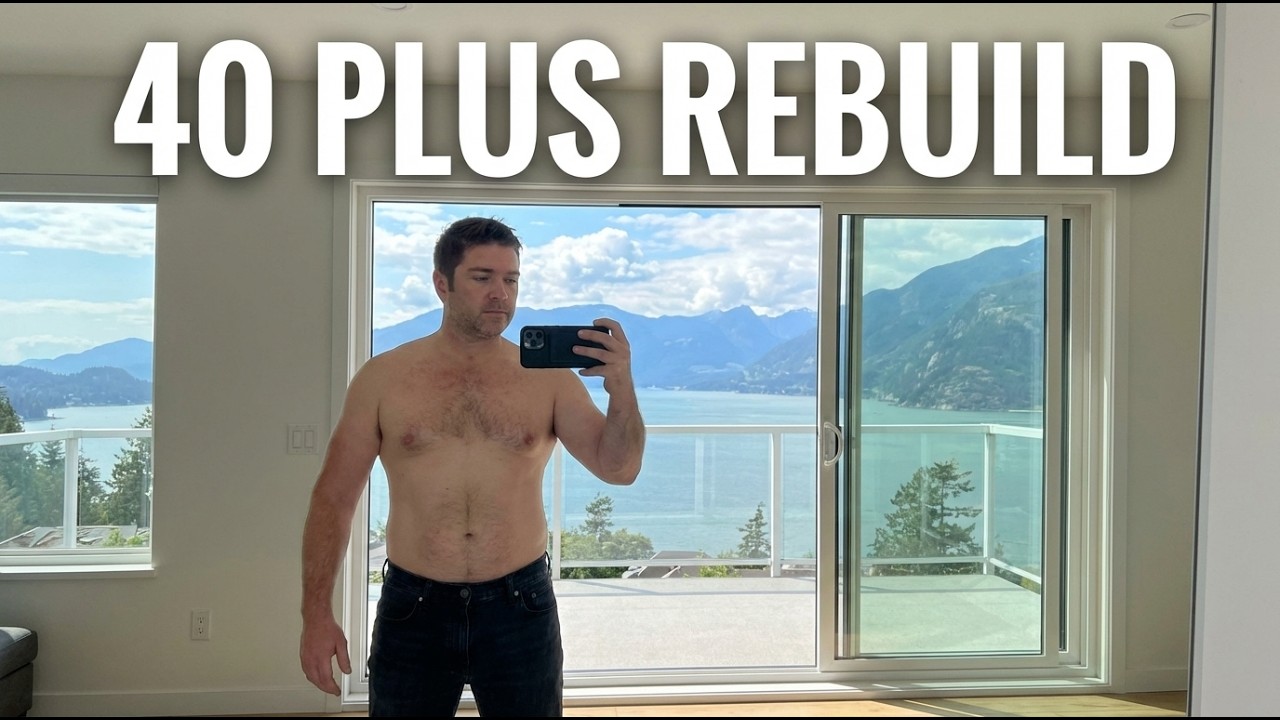
The data is undeniable. By following the GLP-1 Muscle Preservation Protocol, I have dropped 48lbs of fat and replaced it with functional, lean muscle at 43. We are no longer just losing weight; we are in the “Forge.” Phase 2 is about getting shredded while staying strong.
If you are sitting at 250lbs wondering if the rebuild is possible, look at the protocol. You don’t need a miracle; you need a system. Stop being the laborer and start being the Foreman of your own health.

Key Takeaways
- GLP-1 receptor agonists like Tirzepatide (Mounjaro) are highly effective tools, but require active muscle preservation strategies.
- Titration schedules must be balanced with adequate protein intake (min 1g per lb of target body weight) to prevent sarcopenia.
- Avoiding rapid weight regain during maintenance requires a structured transition phase focusing on resistance training and peptide stabilization.
References
- Wilding JPH, et al. Once-Weekly Semaglutide in Adults with Overweight or Obesity (STEP 1). New England Journal of Medicine (2021).
- Jastreboff AM, et al. Tirzepatide Once Weekly for the Treatment of Obesity (SURMOUNT-1). New England Journal of Medicine (2022).
- Cava E, et al. Preserving Healthy Muscle during Weight Loss. Advances in Nutrition (2017).
Continue The Protocol
📋 Related Protocols
🏗️ Built by Wayne Stevenson
Licensed BC Builder #52603
Keystone Possibilities — Sea-to-Sky Construction
🎵 Training Soundtrack

⚠️ Medical Disclaimer
This article is a personal case study for educational purposes only. Wayne Stevenson is a construction superintendent and metabolic researcher, not a doctor. Nothing here constitutes medical advice. GLP-1 / GIP therapies are powerful prescription drugs—always consult your licensed physician before starting or modifying any protocol.