
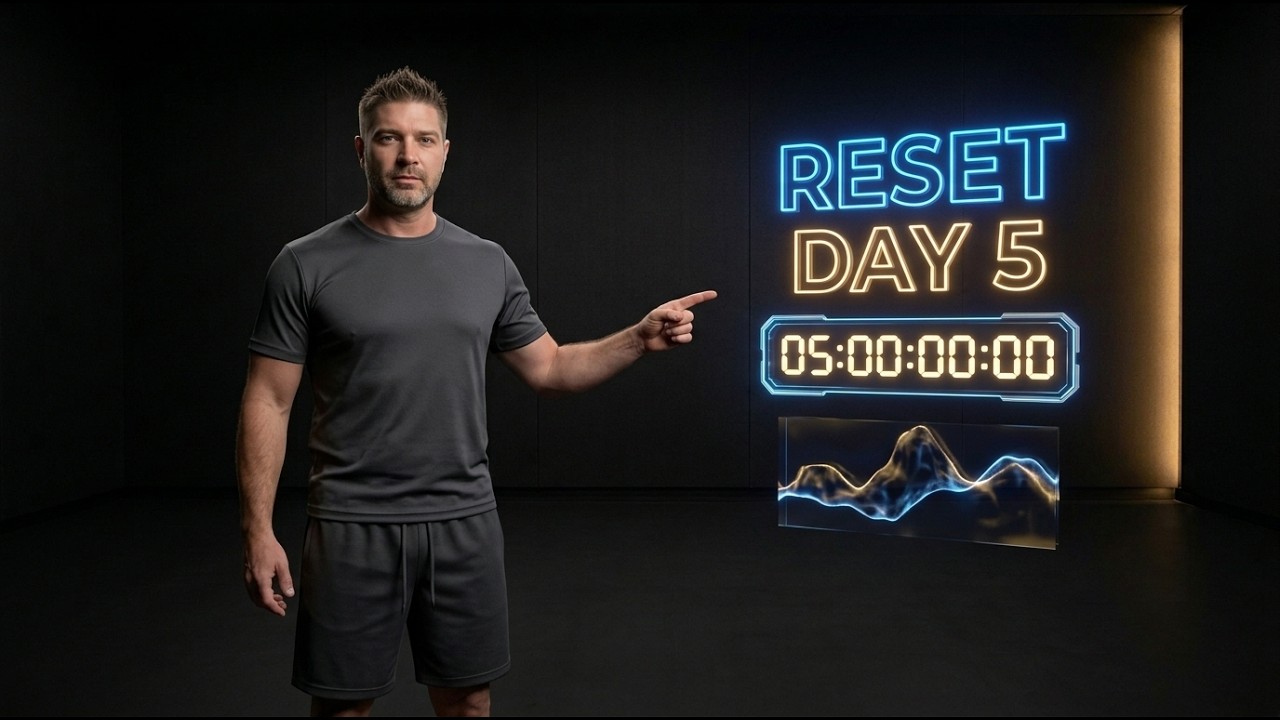
Welcome to Keystone Protocols. In this comprehensive protocol breakdown, contractor and biohacking experimenter Wayne Stevenson details his 11-month recomposition journey on Mounjaro (Tirzepatide)—shifting from 258 lbs down to a solid 210 lbs set-point frame while preserving lean muscle mass and optimizing dermal collagen integrity.
1. The Pharmacokinetic Rationale for 5-Day (120-Hour) Dosing
A primary challenge during extended GLP-1/GIP receptor activation is the occurrence of metabolic plateaus and end-of-week hunger surges (“food noise”). Standard clinical prescribing guidelines utilize 7-day (weekly) subcutaneous administration schedules. However, pharmacokinetic analysis published in the NEJM SURMOUNT-1 Trial demonstrates that Tirzepatide possesses an elimination half-life (t1/2) of approximately 5 days (120 hours).
When administered on a rigid 7-day schedule, serum concentrations decay significantly by days 6 and 7, causing a peak-to-trough fluctuation index exceeding 51%. This trough triggers rapid receptor signal decay and rebound appetite surges. By transitioning to a 5-day split schedule (e.g., 8.5 mg every 120 hours), the steady-state plasma fluctuation index flattens to 30.5%, maintaining unyielding dual GIP/GLP-1 receptor saturation without necessitating aggressive dose escalation.
2. Breaking the 11-Month Metabolic Plateau
At month 6 to 9, many individuals experience a physiological plateau due to metabolic adaptation (adaptive thermogenesis). To overcome this set-point stall without sacrificing lean soft tissue:
- Biased Agonism Optimization: Tirzepatide acts as a full agonist at GIP receptors and a biased agonist at GLP-1 receptors, promoting cyclic AMP (cAMP) generation while reducing β-arrestin recruitment. This minimizes receptor internalization and prevents long-term receptor desensitization (PubMed Central Study).
- Nitrogen Retention & Muscle Sparing: Paired with progressive resistance training and minimum 1.0g per pound of body weight protein intake, nitrogen balance remains positive during subcutaneous adipose tissue loss.
3. Dermal Elasticity & Lipid Barrier Protocol
Rapid subcutaneous volume reduction can compromise extracellular matrix (ECM) collagen structure, leading to skin laxity and stretch marks. To preserve dermal elasticity during 48 lbs of frame shrinkage, we implement a targeted dual lipid barrier protocol:
- Transdermal Oleic Acid Enhancers: Emu oil acts as a powerful transdermal penetration vehicle, driving essential fatty acids into the deep dermal layers.
- Bio-Identical Sebum Occlusives: Rendered tallow lipids form a protective moisture barrier, reducing transepidermal water loss (TEWL) and maintaining skin suppleness during recomposition (NCBI Dermal Barrier Study).
4. Official Protocol Resources & Neurowellness Audio
Explore our complete suite of documented protocols, research dossiers, and custom neurowellness soundscapes:
- Official Website & Dossiers: Keystone Recomposition Official Portal
- Spotify Ambient Soundscapes: Keystone Recomposition on Spotify
- YouTube Music Channel: Keystone Recomposition Music
- Subscribe to Keystone Protocols: Subscribe on YouTube