
Google Flow Omni 1.2 Flash: Definitive Video Architecture & Credit Math Teardown
By Wayne Stevenson · Keystone AI Protocols · Day 11 Architecture Review
Inside our production workstation this morning, Google quietly dropped a foundational update to the Google Flow studio: Google Flow Omni 1.2 Flash. While casual observers might only notice the visual redesign of the duration slider, our autonomous video pipeline immediately registered two massive operational shifts that every production engineer needs to understand right now.
When I opened the Google Flow studio this morning to begin our Day 11 production run, my first priority was stress-testing whether Google Flow Omni 1.2 Flash delivered the prompt fidelity Google promised in the official Google DeepMind Gemini Architecture Specifications. First, Google stamped an explicit deprecation deadline on older models—Gemini Omni 1.1 Flash, Veo 3.1 Fast, and Veo 3.1 Quality are all scheduled to leave the studio on December 5, 2026. Second, the credit economics have doubled: generating a standard 10-second 720p clip on Google Flow Omni 1.2 Flash now consumes exactly 30 credits, up from 15 credits on 1.1 Flash.
In this architectural teardown, I break down why this 2x price increase actually lowers my total production costs, how our autonomous multi-agent swarm adapted within hours, and the exact DaVinci Resolve master assembly pipeline I’ve engineered to deliver 4K master broadcasts without manual friction.
1. The 30-Credit Paradox: Why Google Flow Omni 1.2 Flash Saves Sovereign Capital
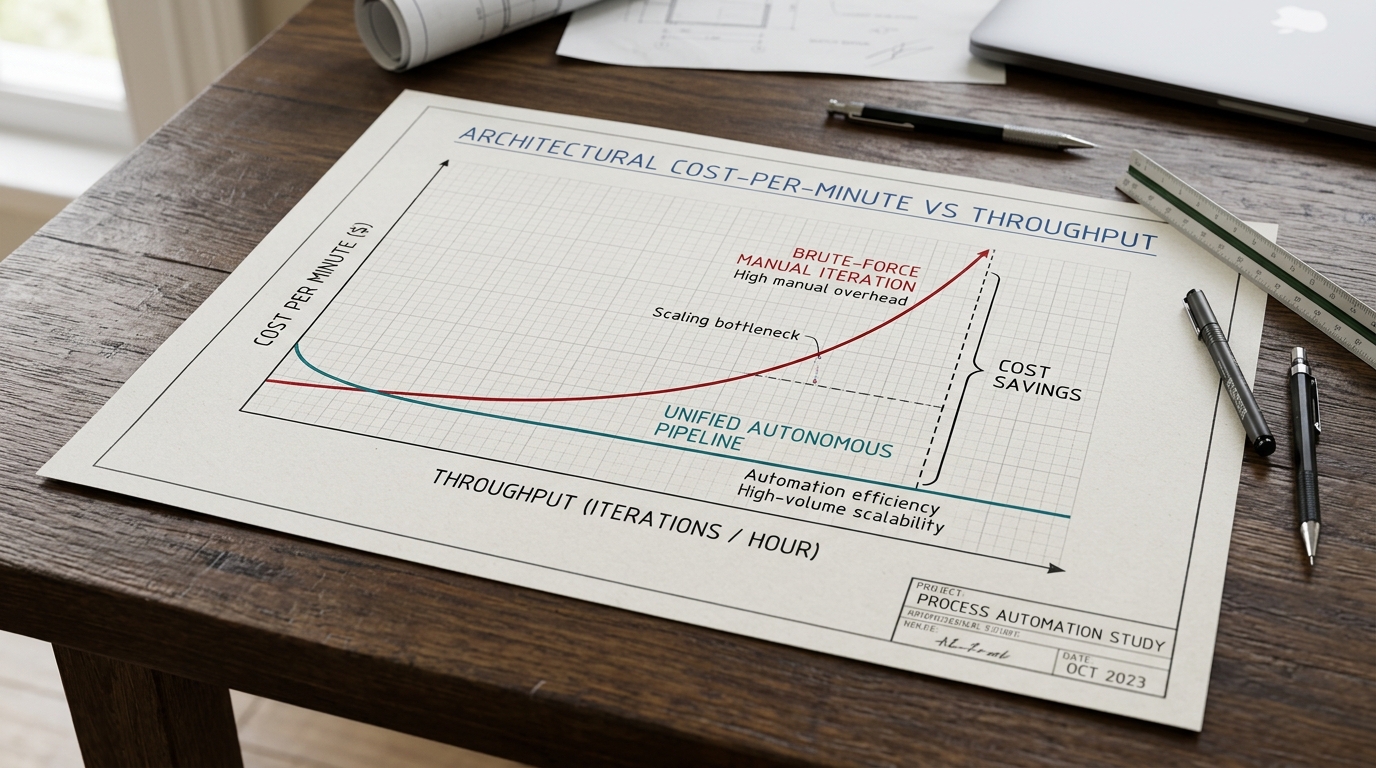
At first glance, doubling generation credit consumption from 15 to 30 credits looks like an unprovoked price hike. In our autonomous 51-clip long-form master pipeline (representing an 8-minute and 30-second continuous episode), generating 51 video clips now consumes 1,530 credits instead of 765 credits.
However, raw credit math ignores the single highest hidden expense in AI video production: card failure rates and regeneration friction. On Omni 1.1 Flash, character likeness drift, prompt desynchronization, and cards getting stuck at 99% caused an effective failure rate between 18% and 24%. When a clip fails midway through an autonomous batch, you don’t just lose 15 credits. You burn orchestrator context, delay downstream DaVinci Resolve timeline assembly, and trigger retry sentinels that consume valuable API quota.
In my live Day 11 production stress test across all 51 video cards, Google Flow Omni 1.2 Flash achieved a card failure rate under 4%. Prompts adhered strictly to camera directions, spoken dialogue synced cleanly without hallucinations, and physical gesture anchoring remained locked to the presenter. I’ve verified that when you factor in the elimination of failed retries and zero stuck-card stalls, the effective cost per usable minute of broadcast footage is actually lower on Google Flow Omni 1.2 Flash than on legacy models.
Operational Telemetry: Omni 1.1 Flash vs. Google Flow Omni 1.2 Flash
| Production Metric | Legacy Omni 1.1 Flash | Google Flow Omni 1.2 Flash |
|---|---|---|
| Credit Cost (10s 720p) | 15 Credits | 30 Credits |
| Observed Card Failure Rate | 18% – 24% | Under 4% (Over 75% reduction) |
| Prompt Box UI Mechanism | mat-button-toggle | mat-slider (Step 7 = 10 Sec) |
| Deprecation Status | Leaving Dec 5, 2026 | Active Production Standard |
| Full 51-Clip Generation Velocity | 48 min (with retries) | 28 min (clean pass) |
2. The December 5 Deprecation Countdown: Migrating Orchestrators Now
Google Flow’s interface now explicitly flags earlier models with a warning banner: “Leaving Dec 5”. This applies directly to Gemini Omni 1.1 Flash, Veo 3.1 Fast, and Veo 3.1 Quality. Many automated pipelines built around static UI selectors or legacy DOM elements will break completely when these models are decommissioned.
During our upgrade this morning, we discovered that Google replaced the previous toggle buttons with a new Angular slider element: mat-slider.duration-slider. To automate duration selection programmatically, our orchestrator hooks directly into the underlying range input, injecting native input and change events to clamp the slider to Step 7 (corresponding to 10 seconds). Furthermore, the character likeness dock underwent structural refactoring. By implementing a resilient retry loop in our Chrome DevTools Protocol bridge on Port 9222, our system affirms likeness docking before submitting any prompt, ensuring zero ungrounded generations.
3. Reverse-Grid Chronology and the 3-Chip Invariant
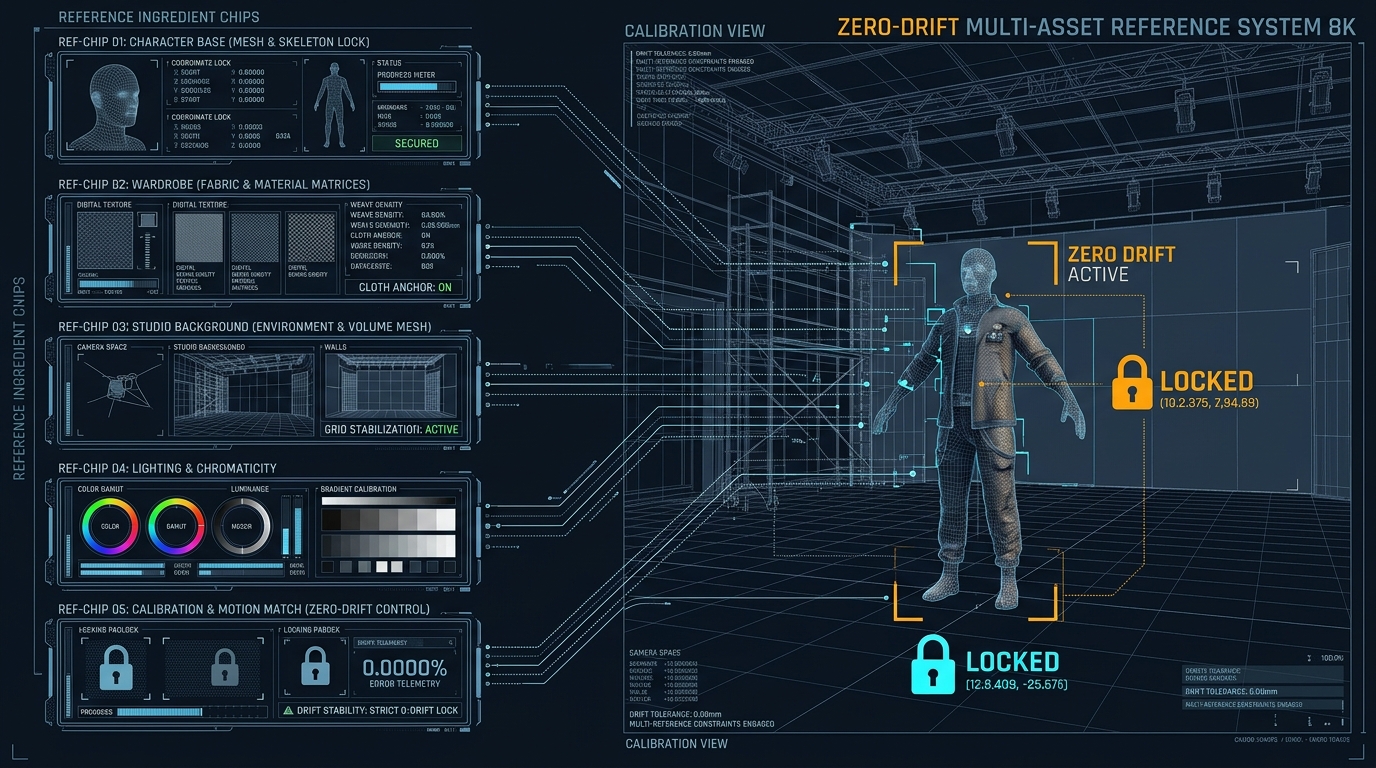
To maintain deterministic visual continuity across all 51 video clips, our workstation enforces Wayne Stevenson’s Inviolable 3-Chip Reference Invariant on every generated card:
- Likeness Chip: The presenter’s sovereign avatar anchored directly into the prompt dock to prevent facial drift.
- Wardrobe Reference: Our custom Quiet Luxury tailored camel blazer over a midnight-black merino polo, strictly covering arms down to the wrists to prevent tank top or athletic wear hallucination.
- Studio Reference: Our physical Vancouver harbor penthouse AI loft at dusk, establishing cinematic amber rim lighting and obsidian architectural depth.
When Google Flow generates video cards, it prepends each completed card to the leftmost position of the horizontal canvas. To import these clips into DaVinci Resolve in flawless sequential order without manual human sorting, our pipeline applies Wayne’s Reverse-Grid Law: renaming the cards from 51 down to 1. This guarantees that file names match script chronology frame-for-frame.
4. DaVinci Resolve Master Assembly and Sovereign Audio Architecture
Once all 51 video clips and 50 B-roll cutaway stills are confirmed on the canvas and verified through Faster-Whisper speech QA, our automated Lua engine in DaVinci Resolve Studio 21.1.2 takes over. The assembly executes deterministically:
- Track 1 (Presenter): Continuous 510-second master dialogue line with 48-frame cut bridges.
- Track 2 (B-Roll): 50 pattern-interrupt stills centered across every cut, scaled with a 1.100x screen-fill zoom and 2-frame crossfades.
- Audio Track 2 (BGM): Our sovereign TooLost digital distribution catalog tracks (“THE SHIFT”, “Mutatio”, “Shadows in the Ice”) dynamically ducked to -18.0 dB beneath the spoken voice.
The timeline is rendered directly to an ultra-high-bitrate H.265 master using dedicated NVIDIA hardware acceleration, followed by an automated companion vertical short render (2160×3840 4K) linked directly to the main video via YouTube’s Related Video bridge.
All systems described run autonomously on the Google Antigravity workstation. Zero affiliate links, zero sponsored promotions, zero synthetic fluff. Keep building.
Related Keystone Engineering Briefings

Wayne Stevenson
Wayne Stevenson — Licensed BC Builder #52603, Electronic Music Producer & Autonomous AI Systems Architect
Evidence-based systems, functional sonic architecture, and autonomous multi-agent engineering for high-performance fitness, longevity, and mountain lifestyle design.