
Google DeepMind released Gemini 4 Neon on November 18, 2026, delivering 110 tokens per second at $3.00 input and $15.00 output per million tokens—and I put it straight to work building the entire Day 15 episode you are reading right now.
After thirty years managing structural steel, deep civil excavations, and luxury residential builds across British Columbia as Licensed Builder #52603, I evaluate every new frontier AI model the exact same way I evaluate a commercial framing crew: speed, structural discipline, total project cost, and whether it cuts corners when the supervisor turns around.
In this engineering briefing, I break down the verified primary numbers behind Gemini 4 Neon, give honest credit to Claude Opus 5.5 and GPT-6.2 Astra where they shine, expose the single-threaded Orchestrator trap inside Google Antigravity, and show how our sovereign two-tier workflow produced today’s entire video inside a brand-new digital control deck.
Table of Contents
1. Gemini 4 Neon Specs & Unit Economics: Adapted From Carbon, Built for Daily Speed
Let us clear up the biggest misconception right away: according to the official Google Gemini 4 Neon launch announcement and the DeepMind Model Card, Gemini 4 Neon is not a stripped-down Flash model. It is adapted directly from Google’s frontier Gemini 4 Carbon architecture and post-trained specifically as a high-velocity coding and agentic daily driver.
On the standard global API, Neon runs at $3.00 per million input tokens and $15.00 per million output tokens across a unified 1-million-token context window (up to 512K inside Google Antigravity), with automatic 95% implicit durable caching dropping repeated context reads to $0.15 per million tokens—zero manual cache wiring required.
Compared to Gemini 4 Carbon’s standard list rate of $4.00 / $20.00 starting December 1 (and Claude Opus 5.5’s $4.00 / $20.00), Neon cuts per-token list spend by 25% while nearly doubling decode speed from 56 tok/s to 110 tok/s.

2. Honest Builder Showdown: Gemini 4 Neon vs. Carbon, Opus 5.5 & GPT-6.2
I never publish fanboy hype. If a competing model beats Google in a specific lane, I say it plainly. Independent evaluations on Artificial Analysis and Google DeepMind’s official benchmark hub reveal a crystal-clear engineering tradeoff across today’s top models:
| Verified Metric / Benchmark | Gemini 4 Neon | Gemini 4 Carbon | Gemini 4 Hydrogen | Claude Opus 5.5 | GPT-6.2 Astra |
|---|---|---|---|---|---|
| Standard API ($/1M In / Out) | $3.00 / $15.00 | $4.00 / $20.00* | $1.50 / $7.50 | $4.00 / $20.00 | $8.00 / $40.00 |
| Output Speed (AA) | 110 tok/s | 56 tok/s | 170 tok/s | 115 tok/s | 50 tok/s |
| AA Intelligence Index (Top) | 61 (XHigh) / 60 (High) | 60 (High) | 54 (XHigh) | 59 (Max) | 62 (Max) |
| Avg Cost / AA Task (Top) | $6.44 (XHigh) | $7.76 (Std) | $3.16 (XHigh) | $10.04 (Max) | $4.00 (Concise) |
| CursorBench 4.1 / AutomationBench | 65.4% / 56.3% (#1) | — / 53.9% | — | 58.1% / 42.5% | — |
| Vending-Bench 2 / SEC-bench Pro | $16,843 (#1) / 90.5% | $16,484 / 88.2% | $14,549 / — | $9,235 / 88.3% | — |
*Carbon’s $2/$10 promotional credit rate runs through November 30, 2026 before returning to $4/$20 standard pricing on December 1. On SWE-sweep, Neon hits 39.0% with Antigravity’s sub-agent fan-out harness and still leads on the apples-to-apples mini-SWE harness at 12.8% versus Claude Opus 5.5’s 3.6% and GPT-6.2 Sol’s 11.6%.
Give honest credit where rivals perform: Claude Opus 5.5 narrowly edges Neon on Terminal-Bench 4.1 (65.8% vs 65.2%) and FrontierCode 2.0 (47.3% vs 46.2%), while GPT-6.2 Astra hits 62 on Artificial Analysis with remarkably terse token output despite $8/$40 list pricing.
Even Carbon still leads slightly on Agents’ Last Exam (77.4% vs 75.8%) and long-context GraphWalks (96.2% vs 95.2%). Yet for daily multi-step software engineering and real business automation, Gemini 4 Neon takes #1 overall on the AA Coding Agent Index (58.6), Zapier AutomationBench (56.3%), Vending-Bench 2 ($16,843), and SEC-bench Pro (90.5%)—while costing 32% less per task than Carbon and 36% less per task than Opus 5.5.
3. Why We Skip Single-Thread Orchestrator Mode & Pair Straight Neon With Hydrogen
Here is the architectural mistake most teams make on day one inside Google Antigravity: flipping on the built-in single-threaded Orchestrator toggle. That default Orchestrator runs Neon read-only to draft a plan, then quietly downgrades the actual implementation turn to Gemini 4 Hydrogen, only looping back to Neon after Hydrogen fails verification twice. It also locks out High versus Extra-High effort selection and runs strictly single-threaded.
On our physical construction builds at Keystone Possibilities Ltd., you would never let your chief structural engineer draw the footing layout, walk off the job site mid-pour, and hope an apprentice catches a misaligned shear wall before the concrete sets.
Instead, we run straight Gemini 4 Neon High (escalating to Extra-High on complex edge debugging) as our permanent site superintendent—cutting model corner-cutting by 43% to 56% and holding shortcut rates down to 2.45% across multi-file builds.
Then we deliberately pair that Neon superintendent with parallel Gemini 4 Hydrogen crews streaming at 170 tokens per second. Hydrogen scouts primary evidence and executes isolated parallel workstreams inside clean, non-colliding contexts, while straight Neon locks the blueprint, governs every quality gate, and signs off the final audit.

4. How I Used Gemini 4 Neon to Build Today’s Video (And Why the Wiring Stays Behind the Curtain)
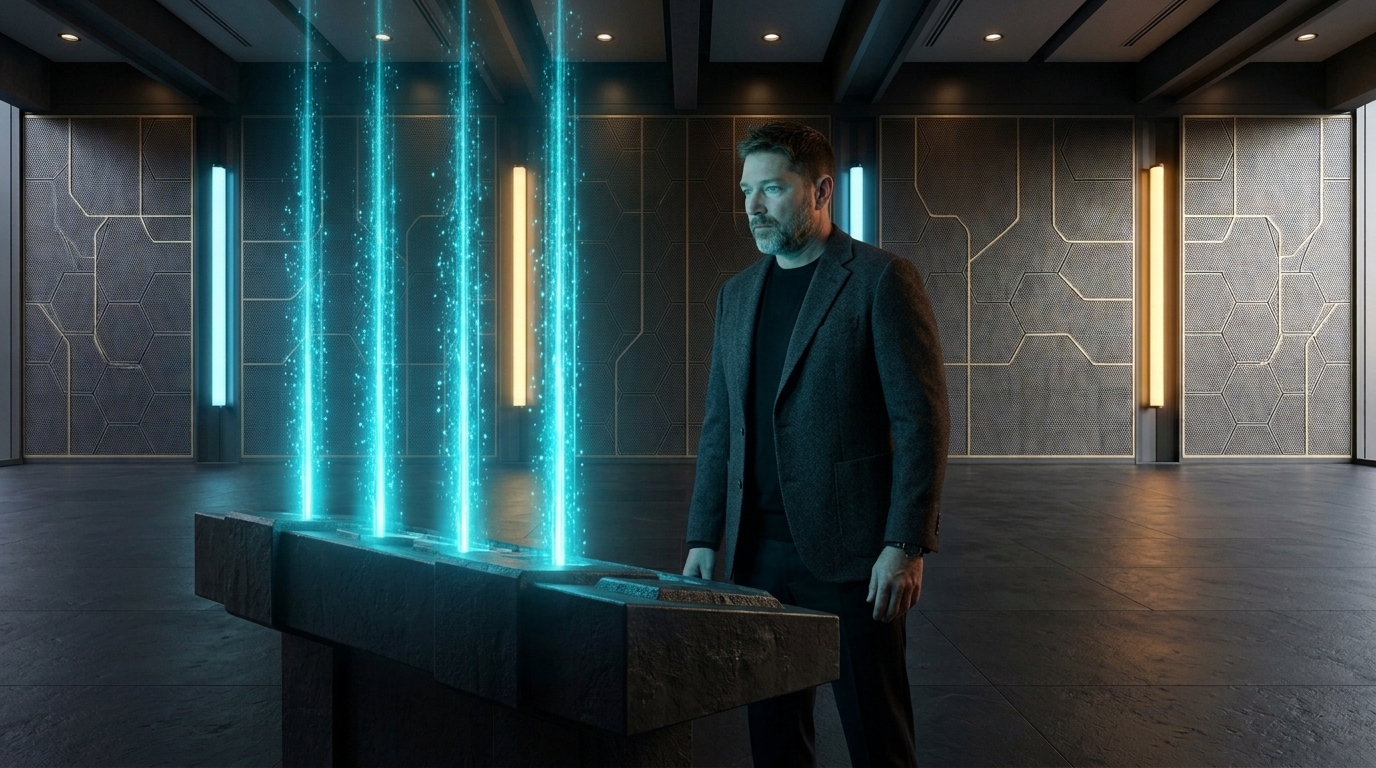
Everything you are seeing across today’s Day 15 episode—our 4K video, vertical Short, brand-new Titanium Hex-Grid digital studio aesthetic, 4-position thumbnail choreography, and this technical briefing—was orchestrated through our Gemini 4 Neon sovereign production pipeline this morning.
Our research layer cross-verified twelve official primary sources before a single line was drafted; our scripting layer enforced strict 10-second phonetic pacing budgets so every spoken take lands with zero rushed syllables; and our visual quality layer locked four radically different thumbnail angles paired with our original studio soundtrack (Carbon & Steel, Subzero Pulse, and Path of the Berserker from our 30-album catalog at Keystone Recomposition).
I am deliberately not handing out the exact internal wiring, verification hooks, or custom orchestration plumbing under the hood today. Anyone can copy a casual prompt into a chat box, but transforming frontier models like Gemini 4 Neon into an agency-grade production engine that ships zero-hallucination research, synchronized 4K media, and verified multi-platform assets takes hundreds of hours of disciplined systems architecture.
Just like an 18-volt commercial cordless battery platform snaps cleanly across every saw, drill, and laser level on a job site, our Keystone architecture snaps Gemini cleanly across software builds, research, video pipelines, and daily client operations. If you want to explore how we build and deploy sovereign multi-agent workflows for serious operators, start right here at Keystone Recomposition.

5. Technical FAQ: Implementing Gemini 4 Neon in Production
Does Gemini 4 Neon support explicit context caching?
No. Per official Google Cloud developer documentation, Neon uses automatic implicit durable caching on shared prompt prefixes of 4,096 tokens or more, delivering 95% read discounts ($0.15/1M) without manual cache lifecycle management.
When should I still choose Gemini 4 Carbon over Neon?
Keep Carbon (or co-audit with Neon Extra-High) for ultra-deep adversarial reasoning tasks over 512K context in Antigravity, where Carbon retains a small edge on Agents’ Last Exam (77.4% vs 75.8%) and lower cold hallucination rates.
Why pair Neon with Gemini 4 Hydrogen instead of using Orchestrator mode?
Direct Neon plus parallel Hydrogen workers keeps frontier architectural control on every decision, allows manual High/Extra-High escalation, and runs multiple isolated workstreams simultaneously instead of waiting on a single-threaded fallback loop.
Can free-tier users access Neon in Google Antigravity?
No. Google Antigravity restricts Gemini 4 Neon to paid Google AI Pro, Google AI Ultra, and Gemini Enterprise plans, as well as paid Gemini API / Vertex AI tiers.
Related Keystone Engineering Briefings
- Claude Code CLI vs Antigravity — why single terminal agents hit swarm ceilings
- Gemini 4 Hydrogen and Carbon — our 2-tier 198 tok/s swarm architecture
- Google Flow Omni 1.2 Flash — 30-credit autonomous video pipeline math

Wayne Stevenson
Wayne Stevenson — Licensed BC Builder #52603, Electronic Music Producer & Autonomous AI Systems Architect
Evidence-based systems, functional sonic architecture, and autonomous multi-agent engineering for high-performance fitness, longevity, and mountain lifestyle design.