
After thirty years managing structural steel, deep civil excavations, and complex infill housing across British Columbia as Licensed Builder 52603, I know one universal truth: you never ask one lone framing carpenter to pull 200-amp copper feeders, solder copper plumbing stacks, and inspect his own work alone.
Anthropic recently introduced Claude Code CLI alongside Claude 3.7 Sonnet, introducing hybrid reasoning directly into developer terminals. While the benchmarks look impressive on paper, running a single terminal agent across an enterprise software project exposes serious structural bottlenecks.
Table of Contents
1. Claude Code CLI and 3.7 Sonnet Specs: The Hidden $15/1M Thinking Trap
According to official Anthropic release documentation, Claude 3.7 Sonnet is Anthropic’s first hybrid reasoning foundation model, achieving an elite 72.7% on the SWE-bench Verified leaderboard. Via the Claude Code CLI, developers can command the agent directly from their shell to navigate repositories, run test suites, and execute git commands.
In my workstation benchmarks, I examined the real unit economics. While input tokens remain standard at $3.00 per million, output tokens—which include every generated thought in extended thinking budgets up to 128,000 tokens—cost $15.00 per million tokens. When a single terminal agent loops on deep debugging across a multi-thousand-line codebase, it burns through hundreds of thousands of thinking tokens in linear sequence, ballooning project costs rapidly.

2. The Lone Carpenter Analogy: Why Single-Agent Terminal CLIs Choke
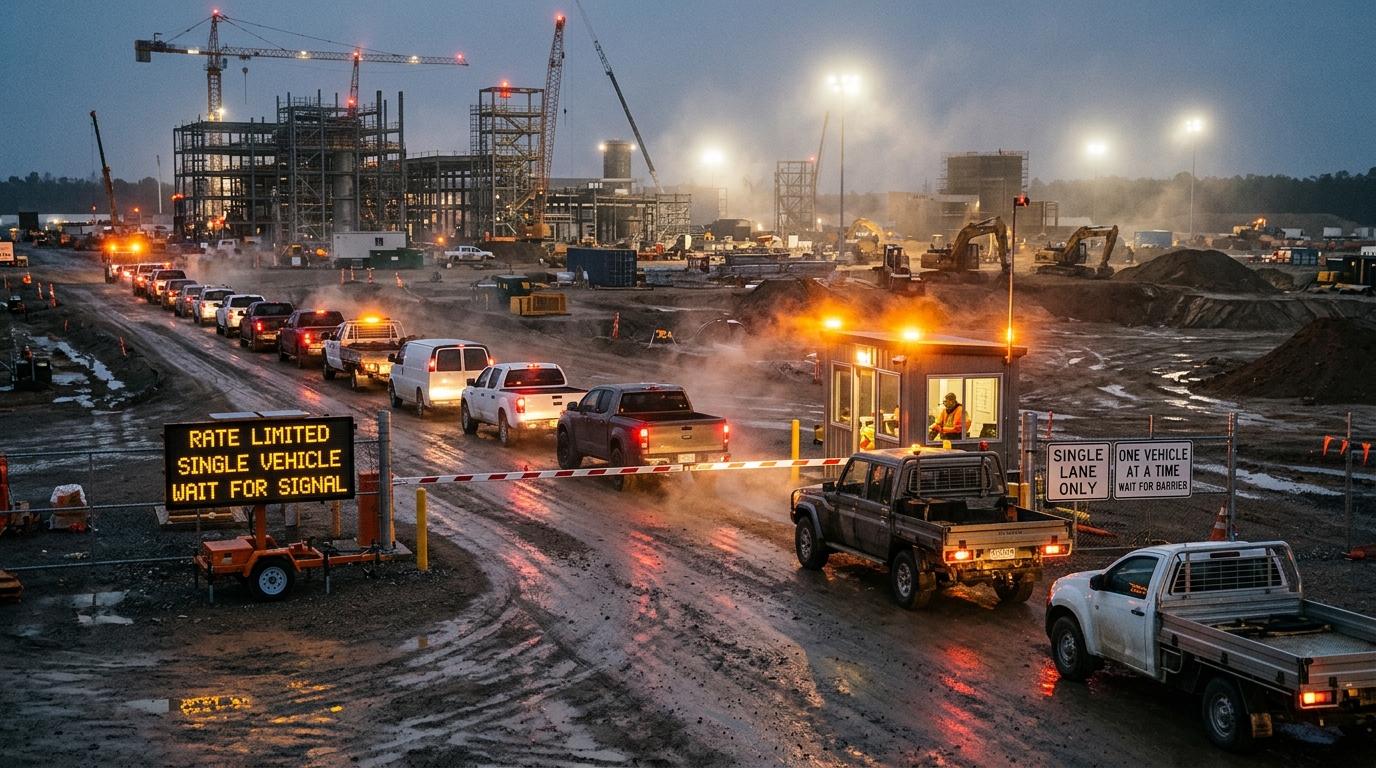
On our physical construction sites at Keystone Possibilities Ltd., a successful commercial build relies on distinct specialized trade disciplines. The Structural Engineer calculates foundation shear and stamps seismic anchors; the Framing Crew erects shear walls; and the Municipal Inspector verifies compliance before insulation goes in.
Single-agent terminal tools force all of those roles onto one cognitive thread. When Claude Code attempts to read, write, test, debug, and refactor inside one linear conversation history, that single transcript rapidly exceeds 50,000 to 100,000 tokens. Just like a job site littered with 2×4 offcuts and scrap drywall, congested context windows trigger memory drift, hallucinated file paths, and costly loop stalls.
3. Architecture Comparison: Single Terminal CLI vs. Google Antigravity Swarm
Here is how single-agent terminal execution compares against our sovereign multi-agent architecture running inside Google Antigravity in late 2026.
| Architecture Layer | Single Terminal CLI (Claude Code) | Google Antigravity Multi-Agent Swarm | Builder Advantage |
|---|---|---|---|
| Model Routing Tier | Claude 3.7 Sonnet ($3 / $15 per 1M) | Gemini 4 Carbon (Plan) + Hydrogen ($1.50 / $7.50) | Up to 81% lower blended operating cost |
| Context Isolation | Single congested terminal transcript | 10 isolated specialist child subagents | Zero cross-task memory bleed & clean logs |
| Prompt Caching | Standard prompt caching | 95% implicit cache ($0.075/1M reads) | 94% token savings on repeated codebase scans |
| Execution Model | Sequential single-thread commands | Native run_workflow parallel fan-out | Simultaneous multi-directory build speed |
| Desktop & OS Hardware | Command-line shell only | Live Chrome CDP Port 9222, DaVinci Lua, CUDA STT | True full-stack sovereign workstation control |
I give full credit where credit is due: Anthropic’s native visible chain-of-thought is a brilliant technical achievement, and for quick terminal scripts, Claude Code is a slick utility. But when building scalable software architectures, tying raw reasoning power to a single terminal agent is a fragile bottleneck.

4. The 18-Volt Battery Platform: Why Gemini Works With Whatever
On my job sites and across our builder operations, I run universal 18-volt cordless battery platforms. That same single battery pack snaps onto our framing nailers, rotary hammer drills, reciprocating saws, and laser levels. You don’t buy a separate proprietary battery for every trade tool.
Inside Google Antigravity, Gemini functions as that exact universal power platform. It connects seamlessly to open FastMCP typed tool servers, live Chrome DevTools on Port 9222 for sub-second browser verification, detached Windows daemons, and local RTX 4090 CUDA Faster-Whisper on Port 9876—powering software development, our licensed construction operations, and our 30-album original music catalog at Keystone Recomposition (featuring today’s background tracks The Morning Blitz, Sunday Plunge Blues, and Sunday Morning Sinners).
5. Technical FAQ: Claude Code vs. Multi-Agent Swarms
Can Claude Code be used inside multi-agent workflows?
Yes, developers can wrap Claude Code via subshells, but its output format is designed for human interactive terminal reading rather than structured machine-to-machine JSON contracts, adding parsing overhead.
Why is Gemini 4 Hydrogen so effective for parallel subagent swarms?
At $1.50 per million input and $7.50 per million output tokens streaming at 198 tokens per second, with 95% implicit caching dropping repeated reads to $0.075/1M, Hydrogen delivers frontier-grade agent speed at 1/10th the cost of heavy reasoning loops.
How does context isolation eliminate agent hallucinations?
When a subagent receives only the exact files, tests, and task constraints needed for its slice of work, its context window stays under 15,000 tokens. This eliminates the ‘lost in the middle’ cognitive degradation that plagues 100K-token terminal transcripts.
What is the best way to get started with multi-agent architecture?
Start by separating your workflow into three distinct phases: Systems Architect for contracts, Code Builder for isolated implementation, and Boss Auditor for adversarial verification—using open FastMCP tools to maintain strict separation of concerns with Claude Code CLI.